
Glen Manor is among my favorite wineries. I think they are among the best quality wine producers on the east coast. It was Washington Post wine columnist Dave McIntyre who first introduced me to them many years ago. They are among the favorite wines of anyone who covers Virginia or east coast wineries.
I got an opportunity to taste these wines middle of last year.
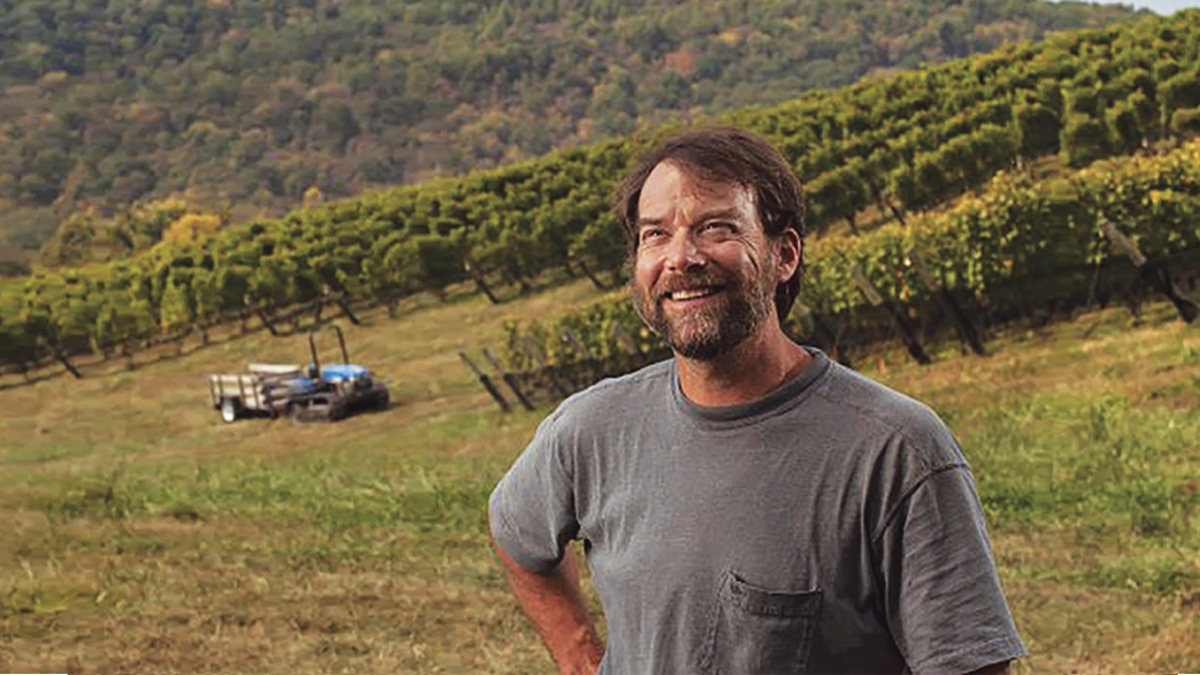
The first thing you need to know about the winemaker Jeff White - he is a farmer. He's as unpretentious a winemaker as you'll ever meet. OK, now to the beginning. Anna Rae married Alpheus Lee White. They inherited a portion of the family farm, Alpheus and Anna Rae had three sons, the youngest of whom developed an interest in and an appreciation for fine wines. Alpheus White along with his three sons own the farm winery business together. It is managed and operated by the youngest brother, Jeff Raymond White, whose interest and appreciation for wines blossomed while working for a nearby Virginia winery. He established the original vineyards in 1995 and envisioned what is today Glen Manor Vineyards. Over time, additional vineyard plantings have been added, slowly increasing the acres under vine.
Jeff went into defense contracting before going into farming. He eventually worked for the lehgendary Tony Wolf of W Virginia Tech. And then for almost a decade selling his wine grapes to Jim Law of Linden Vineyards.
Today, the estate comprises 212 acres of pastures, forests, and currently 17 acres of vineyards. Their farm is recognized by the Commonwealth of Virginia as a Century Farm for being owned and farmed by five generations of their family for more than 100 years. Today they grow Cabernet Sauvignon, Merlot, Cabernet Franc, Petit Verdot, Nebbiolo, Sauvignon Blanc, and Petite Manseng.

Glen Manor Vin Rouge 2014 is a blended table wine. That's kinda like saying Casablanca is a black-and-white date movie. It is made up of the grapes that were not selected for some of the line's more illustrious wines. Don't worry, you won't be disappointed. The blend is 62% Cabernet Sauvignon, 16% Cabernet Franc, 12% Merlot, and 10% Petit Verdot. They made 450 cases. According to the winemaker, "Following an extremely cold winter, spring was wet and cool and the first half of summer was wet and hot. In August, the rains stopped and we enjoyed a relatively dry and warm harvest with no tropical storms moving through our area. Harvest began in late September and lasted through the middle of October. The grapes were hand-harvested and chilled overnight. A triple sorting, (at picking in the vineyard, and on the crush pad, pre- and post-destemming) was performed and the berries were destemmed without crushing. The whole berries filled small one-ton fermenters and then cold soaked for 4 days. Moved into the fermentation room, the bins were warmed to 60ºF and inoculated with yeast. Fermentation temperatures reached into the mid-80ºs and lasted about 7 to 10 days with two cap punch downs each day. Malolactic fermentation began in the bins after primary fermentation was complete. After additional maceration time ranging two to three weeks, the wine was pressed off, allowed to settle overnight and then racked into new and older French oak barrels where malolactic fermentation completed. The wines rested for five months before this blend was assembled during the summer of 2015. This wine was bottled unfiltered and unfined in May 2016."
Suffice to say, the wine is exceptional. What is the opening wine for Glen Manor, let's be honest, it like the high end of the line at a lot of other places. Jeff is a meticulous winemaker, and his wines show it. There's lots of fruit up front. Dark raspberry, ripe cherry, red cassis, and plum. Lively, with notes of cedar and spice, and a nice acidity which keeps this wine alive in the mouth for some time. Absolutely lovely.

St. Ruth was the next wine. Apparently, St. Ruth (not a grape variety) is named for a family member. Stephen Clifton Lawson and his wife, Annie Susan Beaty, purchased the land in 1901. Their only child was Ruth Ardelia Lawson. Glen Manor St. Ruth 2014 was made from 56% Merlot, 35% Cabernet Franc, 9% Petit Verdot. "Following an extremely cold winter, spring was wet and cool and the first half of summer was wet and hot. In August, the rains stopped and we enjoyed a relatively dry and warm harvest with no tropical storms moving through our area. Harvest began in late September and lasted through the middle of October," according to the winemaker's notes. "The grapes were hand-harvested and chilled overnight. A triple sorting, (at picking in the vineyard, and on the crush pad, pre- and post-destemming) was performed and the berries were destemmed without crushing. The whole berries filled small one-ton fermenters and then cold soaked 4 days. Moved into the fermentation room, the bins were warmed to 60ºF and inoculated with yeast. Fermentation temperatures reached into the mid-80ºs and lasted about 7-10 days with 2 cap punch downs each day. ML fermentation began in the bins after primary fermentation was complete. After additional maceration time of from 2-3 weeks, the wine was pressed off, allowed to settle overnight and then racked into new and older French oak barrels where ML fermentation completed. The wines rested for five months before this blend was assembled during the summer of 2015. This wine was bottled unfiltered and unfined in July 2016." They made 280 cases.
I can only imagine Auntie Ruth was a person of some stature - with some brain behind her flinty eye, and sophisticated manor, because this wine is that. Its sophisticated, complex, and has a solid backbone. Some nice dark fruit here, dark cherry, dark raspberry, cassis and hints of cocoa and spice. Lauers of dark fruit swirl with hints of cranberry and a hint of earthiness. A lovely, supple finish. Massively impressive.

Now, it's hard to distance oneself from the previous two wines, since they were sooooo good. But the Glen Manor Hodder Hill 2014 is not just a step above. This wine is sooo impressive. Hodder Hill is made from sorted, hand selected grapes that go into this blend. Hodder Hill is the apex of what the terroir of Glen Manor stands for. Shines form. The vineyards are on a western slope of the northern Blue Ridge Mountains, between 1000 and 1400 feet above sea level. These vines grow deep, in steep and well drained rocky soils. The vines are cane pruned and trained to both the Open Lyre and Double Guyot system.
Hodder Hill is named for family as well. This time an uncle - Raymond Hodder Rudacille, the second generation of their family to farm and live on the land. "Following an extremely cold winter, spring was wet and cool and the first half of summer was wet and hot. In August, the rains stopped and we enjoyed a relatively dry and warm harvest with no tropical storms moving through our area. Harvest began in late September and lasted through the middle of October," read the winemaker;s notes. "Grapes were hand harvested and chilled overnight. A triple sorting, (in the vineyard, and then on the crush pad, pre- and post-destemming) was performed and the berries were destemmed without crushing. The whole berries filled small one-ton fermenters and were cold soaked 4 days. Moved into the fermentation room, the bins were warmed to 60ºF and inoculated with yeast. Fermentation temperatures reached into the mid-80ºs and lasted about 7-10 days with 2 cap punch downs each day. ML fermentation began in the bins after primary fermentation was complete. After 2-3 weeks of additional maceration time including daily tastings, the wine was pressed off, allowed to settle overnight and then racked into French oak barrels where ML fermentation completed. The wines rested for five months before this blend was assembled during the summer of 2015. This wine was bottled unfiltered and unfined in July 2016." 525 cases were made.
This is a big, strong, powerful wine driven by a classic blend of 69% Cabernet Sauvignon, 16% Merlot, 15% Petit Verdot. Dark cherry, bark raspberry, blackberry, dark cassis, and hints of plum jam all come through, Swirls of vanilla, dark cocoa, and spice easily take over the whole second stage of tasting, before the tannins and the fruit settle in for a good long time. Complexity and layering of favors make this an intense experience.
You need to taste it to understand.
Congrats Jeff.